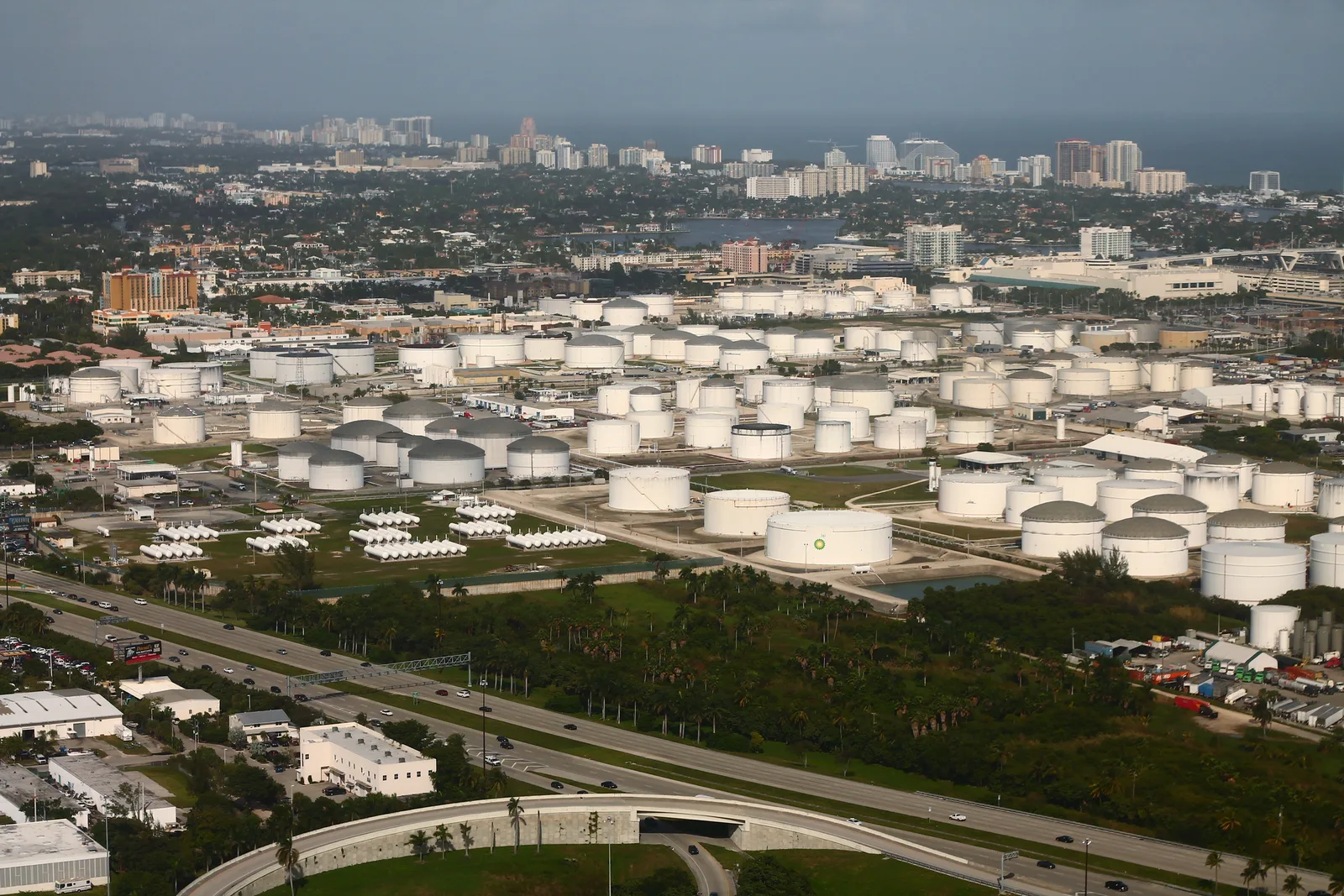
A $30.75 million federal grant covers the full request for Port Everglades' $184.5 million Slip 1 expansion, which lets bigger fuel ships dock. Work starts in 2028.
Port Everglades has won a $30.75 million federal grant to widen the slip where fuel ships dock. The money covers the port’s full request for its Slip 1 Expansion Project.
The award comes from the Maritime Administration’s Port Infrastructure Development Program. U.S. Transportation Secretary Sean P. Duffy announced it Tuesday, according to the port’s release. The program is spending $498 million on 35 projects in 19 states this round.
What the money pays for
The port said the grant will be used to:
- move a structural bulkhead
- widen the slip to 450 feet
- let larger, more economical ships such as the Aframax class use the slip
- keep fuel operations running during severe weather
The whole project is expected to cost $184.5 million, paid for by public and private money. It will take three to four years. Phase 1 construction is scheduled to begin in 2028, the port said. The release did not say how the rest of the cost will be split.
“The port is greatly appreciative to have received our full funding request for the Slip 1 Expansion Project,” CEO and Port Director Joseph Morris said.
Why Slip 1 matters to drivers and flyers
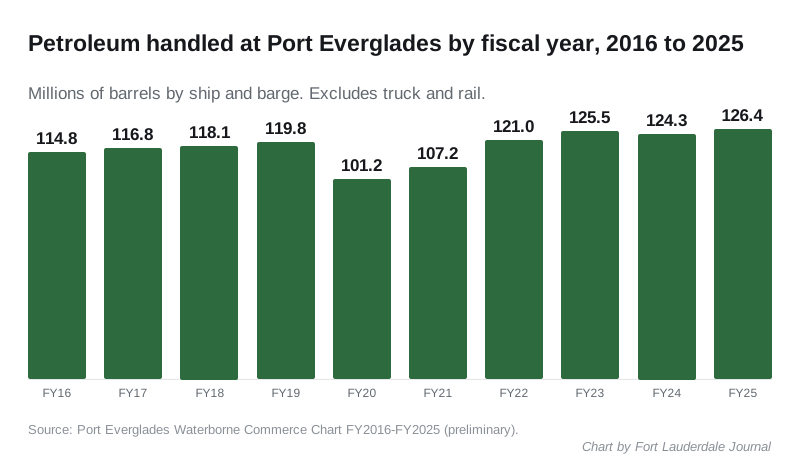
Port Everglades calls itself South Florida’s main seaport for receiving energy products, including gasoline and jet fuel. The port’s Waterborne Commerce Chart puts the scale in numbers for fiscal year 2025:
- 126,368,995 barrels of petroleum by ship and barge
- 576 petroleum tanker and barge calls
- $47.1 million in petroleum revenue for the port
The chart’s recent figures are preliminary. Counting fuel that came by truck and rail, the port handled 131,855,261 barrels that year.
Who pays
Port Everglades is a department of Broward County government. It runs as a self-supporting enterprise fund and does not rely on local tax dollars for its operations, the port said. The Broward County Board of County Commissioners oversees it.
What it means for you
- Nothing changes at the pumps now. Construction does not start until 2028 and will take three to four years.
- The goal is storm resilience. The port said the work will keep its fuel operations running during severe weather. Our hurricane preparation guide covers what to do before a storm arrives.
- The port is also busy with cruise ships. Royal Caribbean’s Legend of the Seas homeports there from November; read our story on the new cruise season.
Have your say